
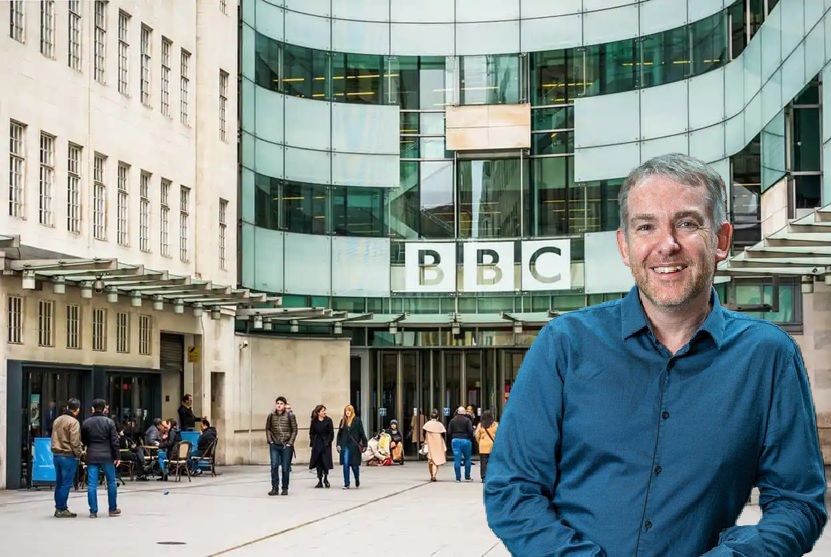
The BBC is preparing for a major workforce reduction, with plans to eliminate up to 2,000 roles as mounting financial pressures force a sweeping internal reset.
In a message to staff, interim director-general Rhodri Talfan Davies signalled that the cuts could affect between 1,800 and 2,000 positions — roughly one in every ten jobs across the organisation’s 21,500-strong workforce. While final details are still being worked out, the direction is clear: costs must come down quickly.
The broadcaster is grappling with a widening gap between income and expenditure, driven in part by declining licence fee revenues and rising operational costs. To stabilise its finances, the BBC is targeting £500 million in savings over the next two years, part of a broader push to trim at least 10% from its overall cost base in the coming years.
“This is about confronting reality,” Talfan Davies indicated, warning that difficult trade-offs are unavoidable as the organisation adapts to a rapidly shifting media environment.
Industry Shift, Structural Pressure
The restructuring comes at a time when traditional broadcasters are under increasing strain from digital disruption, artificial intelligence, and changing audience behaviour. Although the BBC remains widely used — reaching about 94% of UK adults monthly — its funding model is under pressure. Real-term income from the licence fee has fallen significantly since 2017, eroding financial flexibility.
Internal reforms are expected to extend beyond staffing, potentially affecting content output and service delivery as management reassesses priorities.
The scale of the proposed cuts has drawn sharp criticism from labour groups. Philippa Childs of the Bectu union described the move as a severe blow to both employees and the institution, while Laura Davison of the National Union of Journalists warned it would create widespread uncertainty and damage morale.
If implemented, this would mark the BBC’s largest redundancy programme in nearly 15 years, echoing a similar restructuring drive in 2011.
Leadership Turbulence and Legal Distractions
The cost-cutting push also unfolds against a backdrop of leadership transition and legal challenges. Former director-general Tim Davie stepped down earlier this year following controversy linked to a high-profile defamation lawsuit filed by Donald Trump over a documentary edit.
A new chapter is set to begin next month, when former Google executive Matt Brittin takes over, with a mandate to steer the broadcaster through a period of structural transformation.
For the BBC, the message is unmistakable: survival in a changing media landscape will require not just cost discipline, but a fundamental rethink of how it operates.