
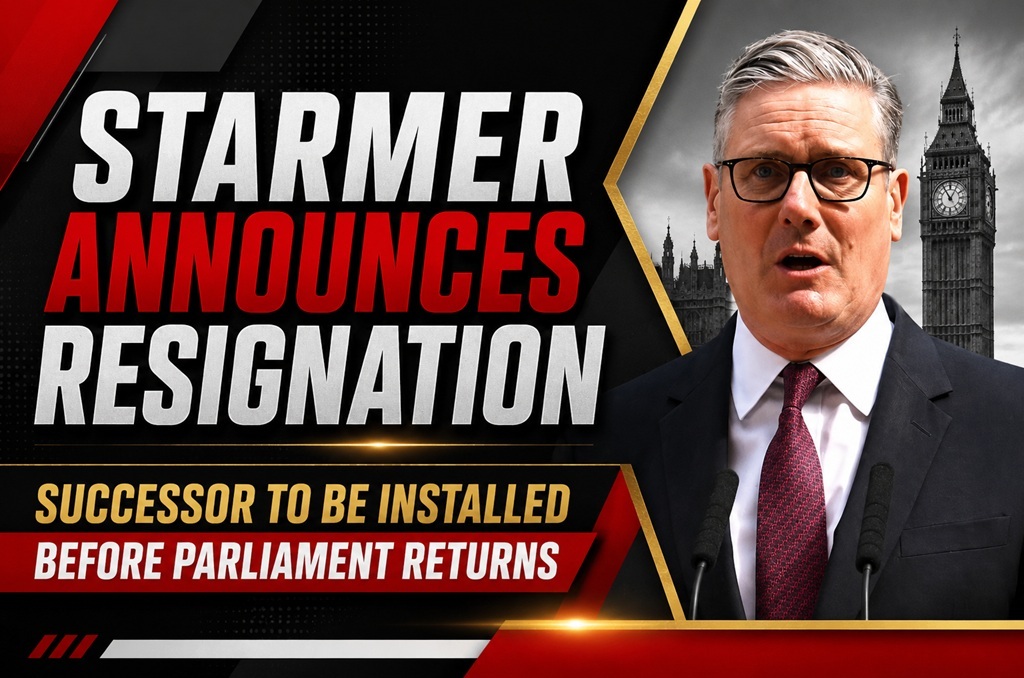
LONDON — British Prime Minister Keir Starmer announced on Monday that he will step down from office, with a new Labour leader expected to take over before Parliament reconvenes in September.
The announcement comes less than two years after Starmer secured a landslide election victory that promised stability and a fresh direction for British politics following years of turbulence.
Starmer said he would fully support his successor and ensure a smooth leadership transition.
The pressure on Starmer had been mounting for months amid declining public support and growing unease within the Labour Party. Calls for change intensified after Greater Manchester Mayor Andy Burnham secured a decisive parliamentary victory on Friday, returning to Westminster after defeating a candidate from Nigel Farage’s Reform UK party.
Burnham’s victory has fuelled speculation that he could emerge as the frontrunner to replace Starmer. Many Labour lawmakers view the veteran politician as a figure capable of reviving the party’s fortunes after a period marked by falling approval ratings for the current prime minister.
Starmer’s popularity has dropped sharply in recent months, reaching some of the lowest levels recorded for a serving British leader.
However, analysts caution that a change in leadership may not automatically resolve the challenges facing the government.
While Burnham has consistently called for fundamental reforms and stronger measures to address the cost-of-living crisis, questions remain over his policy positions on foreign affairs, defence and economic management.
Whoever succeeds Starmer is expected to inherit a difficult fiscal landscape, with Britain facing sluggish economic growth, elevated public debt, high borrowing costs and increasing pressure to boost spending in key sectors such as defence and public services.
Britain currently carries some of the highest borrowing costs among the Group of Seven (G7) advanced economies, reflecting concerns over debt levels, weak productivity growth and long-term fiscal sustainability.
Financial markets have also expressed mixed views about Burnham’s potential leadership. Investors continue to assess whether he would maintain fiscal discipline while pursuing ambitious economic reforms.
Economists at Citibank recently warned that any incoming administration would face significant constraints in delivering meaningful change due to limited fiscal flexibility and growing public expectations.
Just days earlier, Starmer had indicated he was prepared to contest any formal Labour leadership challenge. However, developments over the weekend appear to have altered his position, ultimately leading to Monday’s resignation announcement.
The leadership transition will mark yet another chapter in Britain’s recent political volatility. The incoming prime minister will become the country’s seventh leader since the 2016 Brexit referendum, underscoring the difficulties successive governments have faced in addressing stagnant living standards, strained public services and concerns over illegal immigration.
Political risk consultancy Eurasia Group previously suggested that a September departure would provide Starmer with an opportunity to attend a key UK-European Union reset summit in July, while also allowing sufficient time for his successor to prepare for government.
With Labour now entering a new leadership contest, attention is expected to focus on whether a change at the top can restore voter confidence and reverse the party’s recent decline in public support.