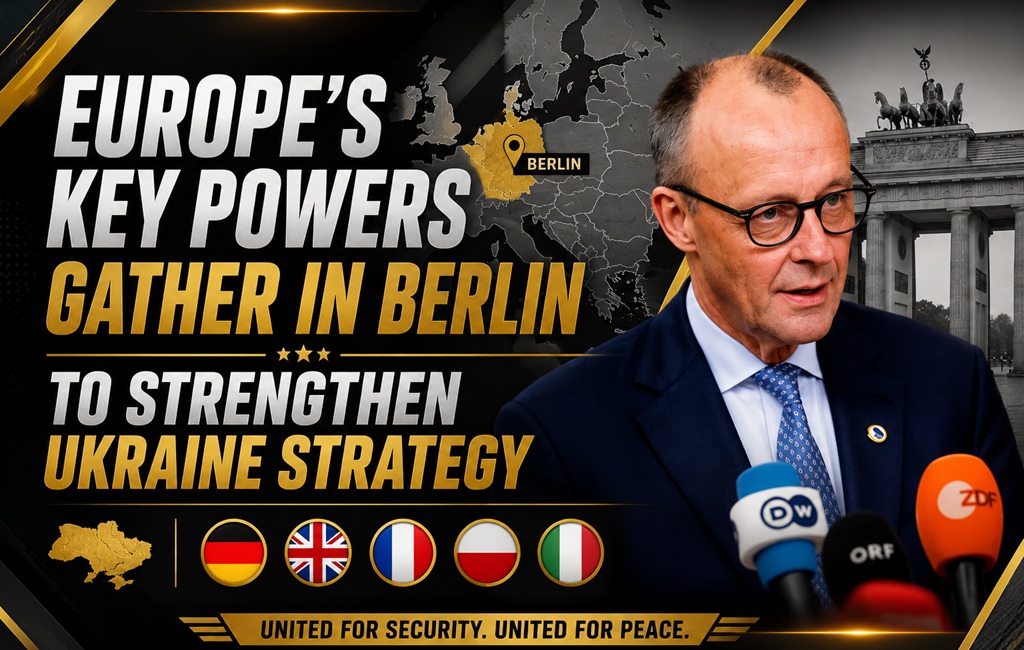
BERLIN, June 22 — Leaders from five of Europe’s most influential nations are set to convene in Berlin on Wednesday for high-level discussions on Ukraine, as the continent seeks to reinforce its role in shaping future security arrangements and supporting Kyiv’s war effort.
Italian Prime Minister Giorgia Meloni is expected to join counterparts from Britain, France, Germany and Poland in the meeting, which comes amid growing concerns over the prolonged conflict and uncertainty surrounding international diplomatic initiatives.
The gathering reflects Europe’s determination to take greater responsibility for regional security as efforts to secure a negotiated settlement between Ukraine and Russia continue to face significant obstacles.
The E5 alliance, established in 2024 to strengthen defence cooperation among Europe’s leading military powers, has become an increasingly important platform for coordinating military assistance, strategic planning and long-term support for Ukraine.
German Chancellor Friedrich Merz confirmed earlier that discussions among the five leaders would take place this week, although details of the agenda have remained largely undisclosed.
The meeting follows last week’s G7 Summit, where Ukrainian President Volodymyr Zelensky urged allies to intensify support for Kyiv amid continued Russian attacks.
During the summit, member nations reportedly agreed to expand the supply of advanced air defence systems and tighten economic pressure on Moscow through additional sanctions. Discussions also included measures to enhance Ukraine’s domestic defence manufacturing capabilities, including missile production and other critical military technologies.
Despite these commitments, Ukrainian officials continue to press Western allies for stronger and faster support, particularly as diplomatic efforts led by the United States have shown limited progress in achieving a breakthrough toward ending the conflict.
Meanwhile, European leaders remain divided over how aggressively to pursue direct communication with Moscow. Diplomatic sources indicate that preliminary contacts have recently taken place at the European Union level in an effort to preserve channels for future dialogue.
However, several member states remain cautious about engaging with the Kremlin, reflecting ongoing disagreements within Europe over the balance between diplomatic outreach and maintaining pressure on Russia.
The Berlin summit is expected to focus on military assistance, European defence cooperation and the broader strategic direction of support for Ukraine as the war enters another critical phase.