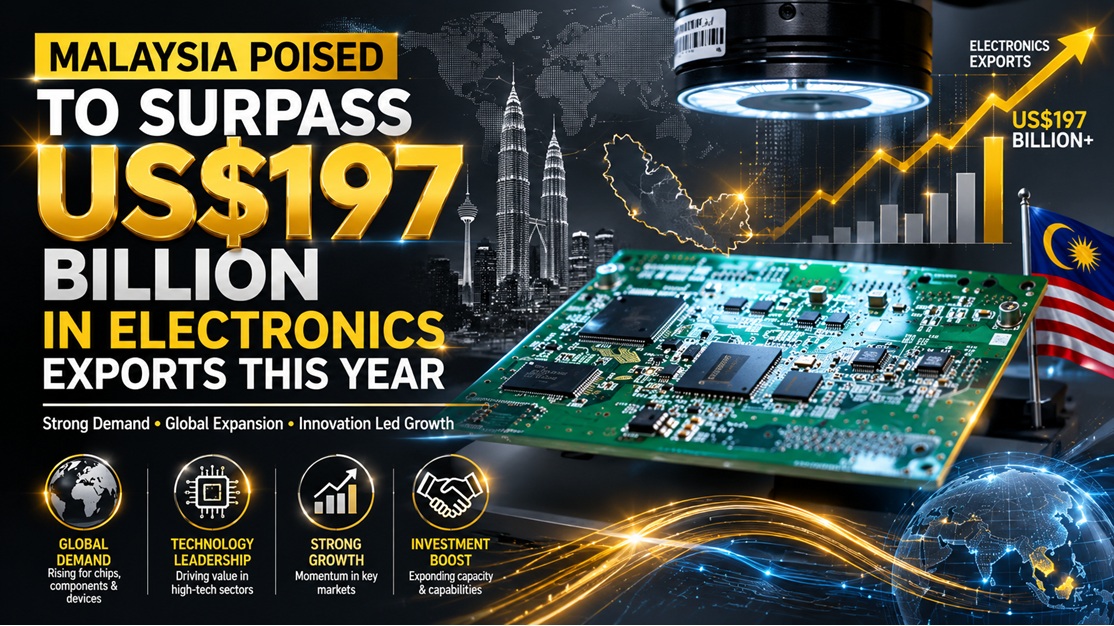
KUALA LUMPUR: Malaysia’s electrical and electronics (E&E) sector is expected to maintain its strong growth momentum in 2026, with exports projected to exceed RM800 billion (approximately US$197 billion), driven largely by sustained global demand for semiconductors.
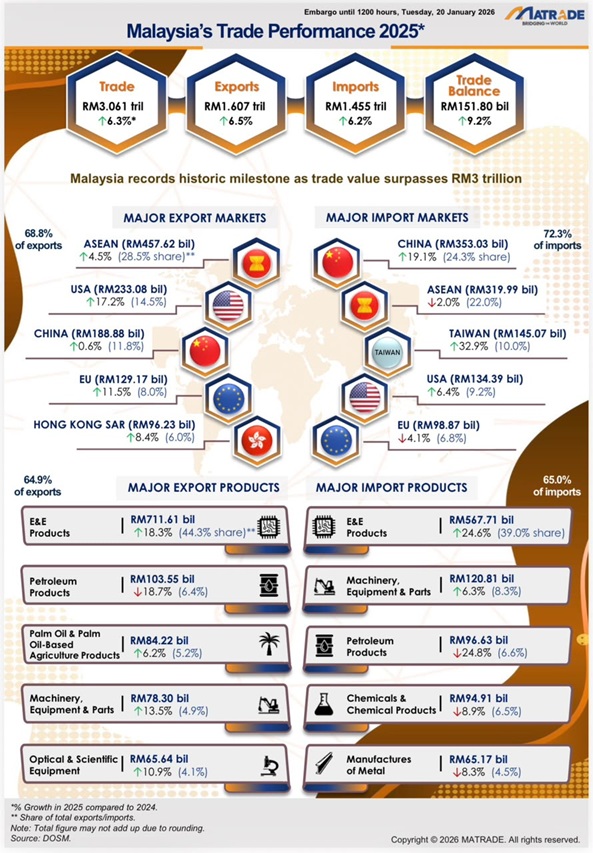
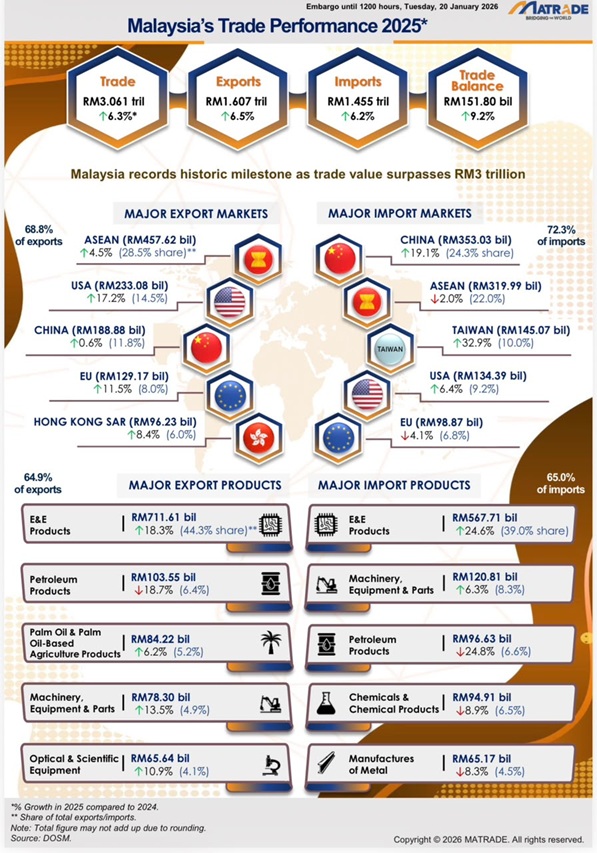
According to Malaysia Semiconductor Industry Association (MSIA) president Wong Siew Hai, the country’s E&E exports have recorded impressive growth over the past two years, rising from RM601 billion in 2024 to RM711 billion in 2025.
Speaking in an interview with Bloomberg TV, Wong expressed confidence that the upward trend would continue.
“I don’t see that slowing down. In fact, the number could be even higher this year,” he said.
Semiconductors remain the backbone of Malaysia’s E&E industry, accounting for around 65% of the country’s total electronics exports and reinforcing Malaysia’s position as one of the world’s key semiconductor manufacturing and assembly hubs.
Despite mounting challenges, including geopolitical tensions, trade uncertainties, a stronger ringgit and rising production costs linked to the conflict in the Middle East, Wong said the industry has remained resilient. The conflict involving Iran has contributed to higher helium prices, an important input in semiconductor manufacturing, but production activities have not been significantly affected.
He noted that Malaysian chipmakers are continuing to perform well while adapting to evolving global supply chain dynamics and tariff pressures.
Wong described the current environment as a “once-in-a-generation opportunity” for Malaysia to strengthen its role in the global semiconductor ecosystem. As multinational companies diversify their supply chains, Malaysia is well positioned to serve both the United States and Chinese markets while moving further up the semiconductor value chain.
He also highlighted the country’s potential to attract greater investment from Japanese semiconductor companies, particularly in areas where Malaysia is seeking to close supply chain gaps and expand its technological capabilities.
The optimistic outlook comes as Prime Minister Datuk Seri Anwar Ibrahim undertakes a three-day official visit to Japan, where economic cooperation and high-technology investments are expected to feature prominently in bilateral discussions.
With robust export growth and increasing international interest, Malaysia’s semiconductor industry is set to remain a major contributor to the nation’s economic expansion and its ambitions to become a leading technology hub in Southeast Asia.