
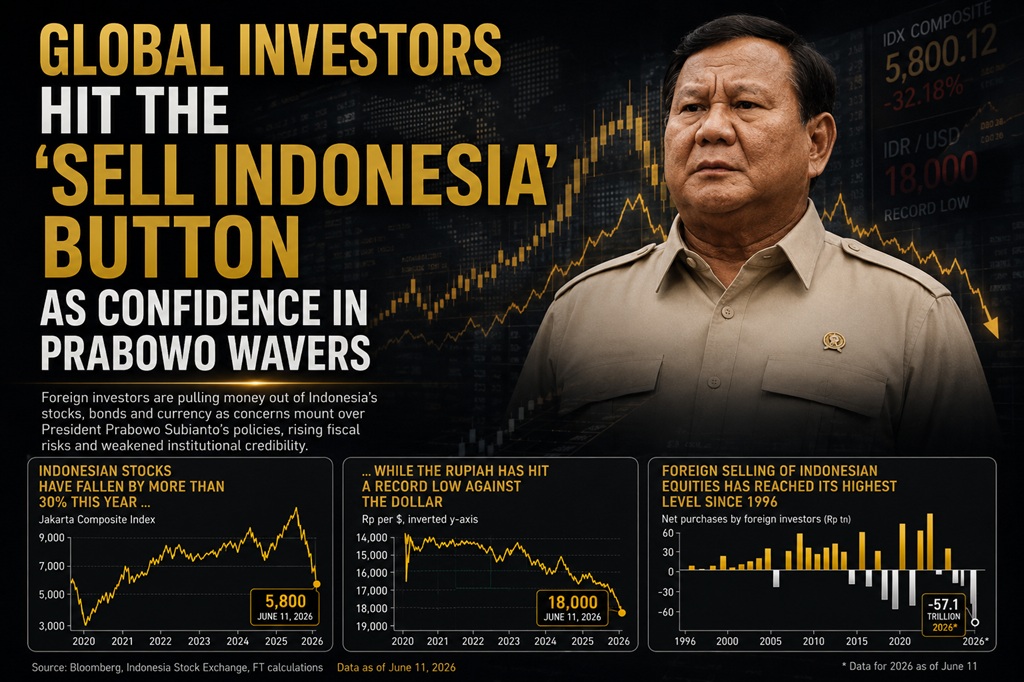
JAKARTA: Indonesia is facing one of its most severe investor retreats in decades as foreign funds pull money out of the country’s stocks, bonds and currency, reflecting mounting concerns over President Prabowo Subianto’s economic direction.
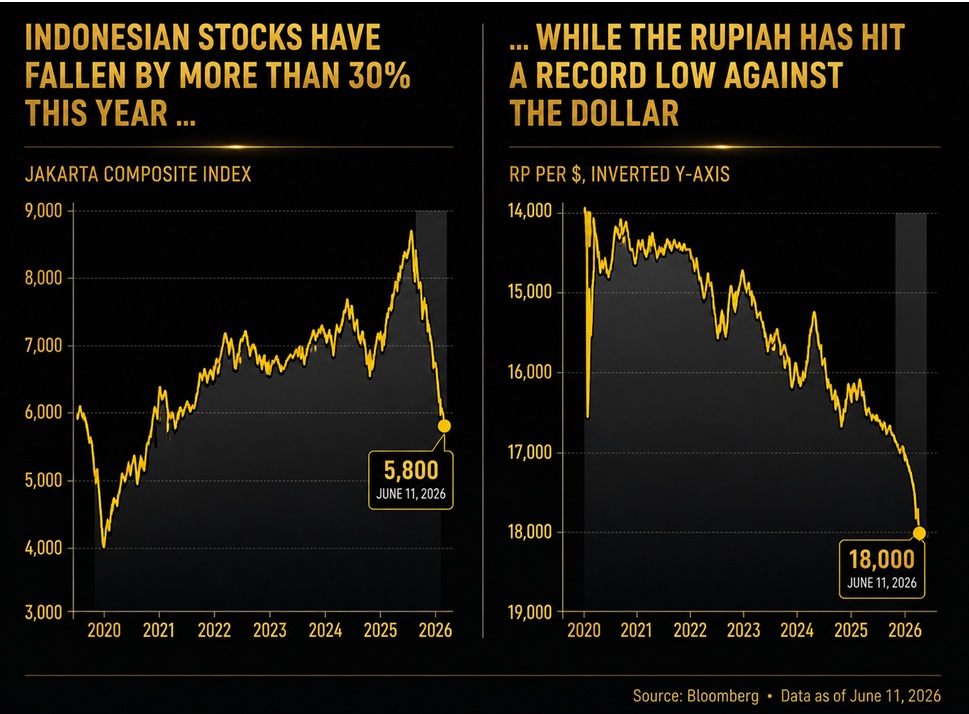
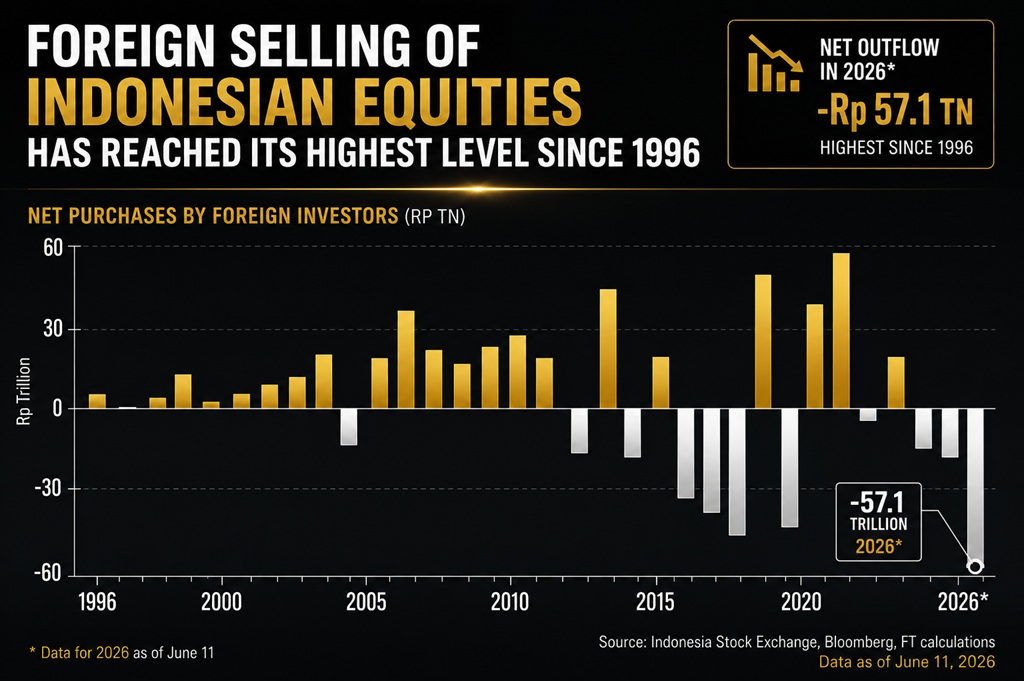
International investors have sold a net US$3.9 billion worth of Indonesian equities this year, marking the largest annual outflow since at least 1996. The exodus has helped drive the benchmark Jakarta stock index down by around 32 per cent, making it one of the world’s worst-performing equity markets in 2026.
The pressure has also spread to the rupiah, which is trading close to historic lows against the US dollar. The currency has weakened by more than seven per cent this year, ranking among Asia’s poorest performers, while government bond prices have dropped to multi-year lows.
Market analysts say investor sentiment has deteriorated as Prabowo’s administration pushes an ambitious economic agenda that combines aggressive spending with greater state involvement in key sectors.
Since taking office, the Indonesian president has rolled out several costly social programmes, including a nationwide free school meal initiative estimated to cost around US$15 billion. The programme has faced criticism over implementation issues and corruption allegations, adding to doubts over fiscal management.
Investors have also become increasingly uneasy about policy changes affecting major state institutions. Efforts to broaden the central bank’s responsibilities beyond monetary stability and recent leadership changes in the government’s economic team have fuelled concerns about institutional independence.
The replacement of respected former finance minister Sri Mulyani Indrawati with the more growth-oriented Purbaya Yudhi Sadewa has further reinforced perceptions that Jakarta is prioritising rapid expansion over fiscal discipline.
According to economists, the challenge is not necessarily the government’s growth ambitions but the speed and unpredictability of policy changes.
“There is considerable uncertainty over the policy framework, and markets dislike surprises,” analysts noted.
External factors have compounded the pressure. Rising global oil prices, driven partly by geopolitical tensions in the Middle East, have increased Indonesia’s subsidy burden as the government remains committed to keeping domestic fuel prices affordable.
That commitment is putting additional strain on public finances, with the fiscal deficit approaching the government’s self-imposed ceiling of three per cent of gross domestic product.
Foreign ownership of Indonesian government bonds has fallen to roughly 12.5 per cent, the lowest level in more than a decade, while overseas investors have withdrawn hundreds of millions of dollars from the bond market this year.
Indonesia’s foreign exchange reserves have also declined sharply as Bank Indonesia steps up intervention to stabilise the rupiah, leaving reserves at their lowest level in nearly two years.
Financial markets now face several key tests. Global index provider MSCI is expected to review Indonesia’s market status later this month, with any downgrade potentially triggering another wave of selling by international funds.
Meanwhile, global credit rating agencies continue to monitor the country’s fiscal position and governance standards, with recent outlook revisions highlighting concerns over policy uncertainty and institutional strength.
The government has responded by signalling closer co-ordination between fiscal and monetary authorities. Bank Indonesia recently raised interest rates outside its normal policy schedule, helping the rupiah and domestic equities recover part of their recent losses.
Officials say foreign demand for newly issued government bonds has improved following the move and have pledged to continue supporting financial market stability.
Despite those efforts, many international investors remain cautious.
Portfolio managers argue that confidence will depend not only on ambitious economic targets but also on whether Indonesia can preserve strong institutions, maintain fiscal credibility and deliver policies consistently.
For now, global markets appear to be taking a wait-and-see approach, with many investors choosing to reduce exposure until there is greater clarity over Indonesia’s economic trajectory under President Prabowo.